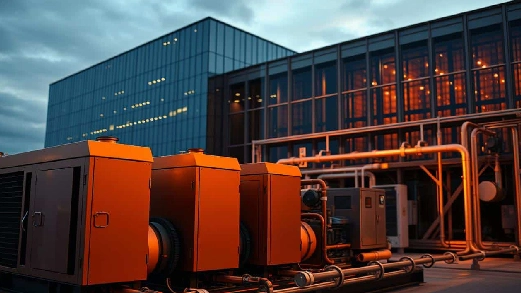
The United States is driving a global rush to build new gas-fired power plants, with a growing share of the proposed capacity tied directly to data centers built for AI workloads, according to new analysis from Global Energy Monitor.
The scale is large enough to reopen a climate fight that many utilities thought was settling. If the projects move from plans to steel in the ground, the report says decades of new fossil generation could be locked in to meet demand forecasts that are still shifting.
Quick facts
- U.S. gas capacity in development: ~252 GW
- Global gas capacity in development: ~1,047 GW
- Share slated to power data centers on-site (U.S.): ~one-third
- Estimated U.S. capital cost (if built): $416B+
- Estimated lifetime CO2 (U.S. pipeline): 12.1B tonnes
- Estimated lifetime CO2 (global pipeline): 53.2B tonnes
- Texas gas capacity in development: 80.6 GW
- Texas planned for data centers: ~40 GW
- Constraint highlighted: Turbine supply backlogs through 2030
The numbers behind the gas buildout
Global Energy Monitor’s tracker shows a record pipeline of gas plants in development worldwide, with the U.S. accounting for a significant share of what is being proposed for the second half of the decade. The report estimates global gas-fired capacity in development would expand existing capacity by nearly 50% if the pipeline is fully built.
- U.S. gas-fired power in development is estimated at almost 252 GW, which the report says would expand the country’s existing gas fleet by nearly 50% if completed.
- About one-third of that U.S. pipeline is slated to directly power data centers on-site, with additional projects expected to serve data centers through the grid.
- Globally, the tracker puts gas power capacity in development at about 1,047 GW after a large increase in 2025.
- The report estimates more than $416 billion in capital costs for the U.S. pipeline if all projects are built.
Why investors, utilities, and communities are watching Texas
The report describes Texas as the center of gravity for the U.S. buildout. It tallies 80.6 GW of gas power in development in the state, including roughly 40 GW planned to directly serve data centers.
That concentration matters because it can collide with two realities at once, grid constraints and local backlash. Data center projects can strain transmission and water resources, while large new power plants raise questions about who pays for infrastructure and how costs flow into electricity bills.
The climate cost, and the uncertainty
The report’s sharpest warning is about lifetime emissions. It estimates U.S. gas projects in development could produce 12.1 billion tonnes of CO₂ over their operating lives if built, and 53.2 billion tonnes globally.
Keep exploring
Hand-picked AI guides for you.

Google’s Project Genie rollout rattles game stocks with prompt-built worlds

Broadcom posts record fiscal 2025 results as AI chip demand drives growth

Meta plans Mango image and video model for early 2026, alongside Avocado text model

People are getting their news from AI, and it is shaping what they believe

Databricks enters talks to raise $5 billion at a $134 billion valuation
At the same time, the pipeline is not a guarantee. The report notes practical constraints that can slow projects, including turbine supply bottlenecks and long grid connection queues, and many proposals remain early-stage.
A useful way to read these figures is as a signal of intent, not a finished outcome. Even if only a fraction of the pipeline is built, the plants that do get completed typically operate for decades, which is why climate groups are focusing on today’s permitting decisions.
What happens next
The next few quarters will bring clearer signals on whether AI demand forecasts translate into signed power contracts, not just announcements. Watch for utility filings, grid operator updates, and local permitting outcomes, especially in regions marketing themselves as data center hubs.
FAQ
Is this buildout guaranteed to happen?
No. The tracker includes projects at different stages, including announced and pre-construction proposals. Some will be delayed, scaled back, or cancelled, especially if demand forecasts or financing change.
Why are some plants planned at data centers instead of on the grid?
On-site generation can reduce dependence on congested grids and speed up timelines. It is often proposed when interconnection queues are long or when developers want tighter control over reliability.
What should AI teams take away from this?
Expect more scrutiny on the energy footprint behind AI services, plus more volatility in the underlying cost stack. If you sell to enterprises, it is worth preparing a clear explanation of where your compute runs and what reporting you can support.